Blick, 10th October 2025 by Katja Richard and Lea Marti
Already a Mother as a Teenager
« Abortion was never an option for me. »
Pregnant at 16: A shock for Marina. As a teenager, she decided to keep the baby. She has never regretted it. Almost two decades later, she looks back and tells what the biggest challenge was for her.
She was almost a child herself when she gave birth to a baby: Marina became unintentionally pregnant as a teenager. An abortion was never an option for her. Today, almost twenty years later, she looks back and recounts what her greatest challenges were as a a mother.
« It happened right away on the first try. When I found out I was pregnant, I burst into tears, I panicked. I didn’t want to have an abortion – I never even questioned that. Deep down, I knew I wanted to keep the baby. My parents were very understanding and supportive of me. This probably also has to do with the fact that my mother herself had her first baby at 17. Just like my grandmother – both were teen mothers. Whether it’s coincidence or fate, I can’t answer that. Of course, we talked about it. But it was never the plan for me to more or less repeat that. »
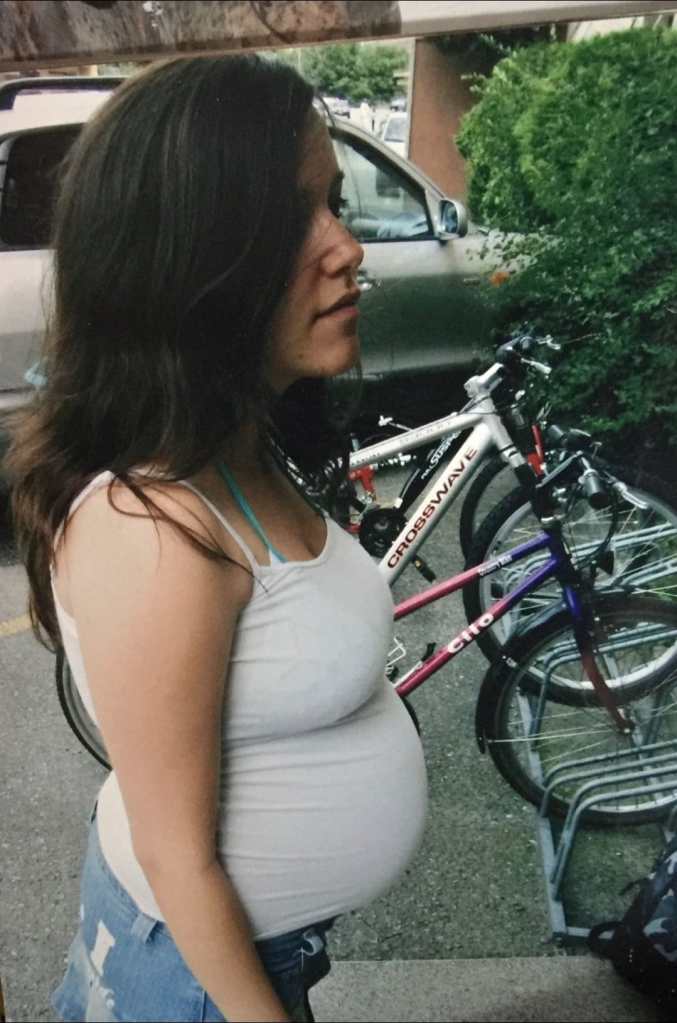
« My boyfriend back then was two years older than me, so still very young at 18. During the pregnancy, we lived together, he supported me. In a small town in Valais, it was a scandal, people gossiped mostly about me. I was the slut who had done it at 16 – that was obvious with my baby bump. I suffered a lot because of that, also in my training. I was doing an apprenticeship as a saleswoman, which I was still able to complete – I owe that to the help of my parents. »
Pumping Milk at School
« The hardest thing for me was the whispers, those meaningful glances – I felt how I was being judged, at work, at school. I was often ashamed. Especially when the baby was there and I had to pump milk at school – in the toilet, where everyone noticed it. The birth went well, I was lovingly cared for, and I felt respected and taken seriously. It was bad afterwards, together with the other mothers in the room. There were those looks again. It was so clear that they were gossiping about me, really mean. Who says you can’t be a good mother at 17? I saw 30-year-olds there who had no idea how to hold their baby. Every mother is a beginner and has to learn how to deal with a baby – no matter how old she is. »
« When Lydia was there, it became difficult with the father of the child. She was four months old when I broke up with him. He became more and more aggressive and also violent – at least only towards me. I never wanted to have anything to do with him again. Lydia also has no contact with him, at her own request. She often asked about her dad, a role that my father has taken on to some extent. It was important to me that she had a male reference. »
Lost Many Friends
« While my friends were traveling the world, going out, and falling in love at 17, I was at home with my baby. I didn’t think that was bad, I had decided to be a mother. And I liked it. However, I lost a lot of contacts at that time, I led a completely different life than my peers. I made up for that when Lydia was a little older – I went to the disco every now and then. I consciously did not enter into a new relationship. My first experience with a man was very difficult, I didn’t want to repeat that. I wanted to be there completely for Lydia and protect her from it. »
« I had to struggle with prejudices for a long time, even when Lydia was older. Her teachers often didn’t take me seriously. It was said: ‘Oh yes, you got her so early’ or: ‘She has no father.’ Every time something doesn’t go smoothly, the topic immediately comes up about my young motherhood. This stigma is really the most difficult thing. But it’s worth it. Lydia is 18 years old today and I am incredibly proud of her. She is a great girl and I wish her that she can go her own way – just as she dreams of it. »
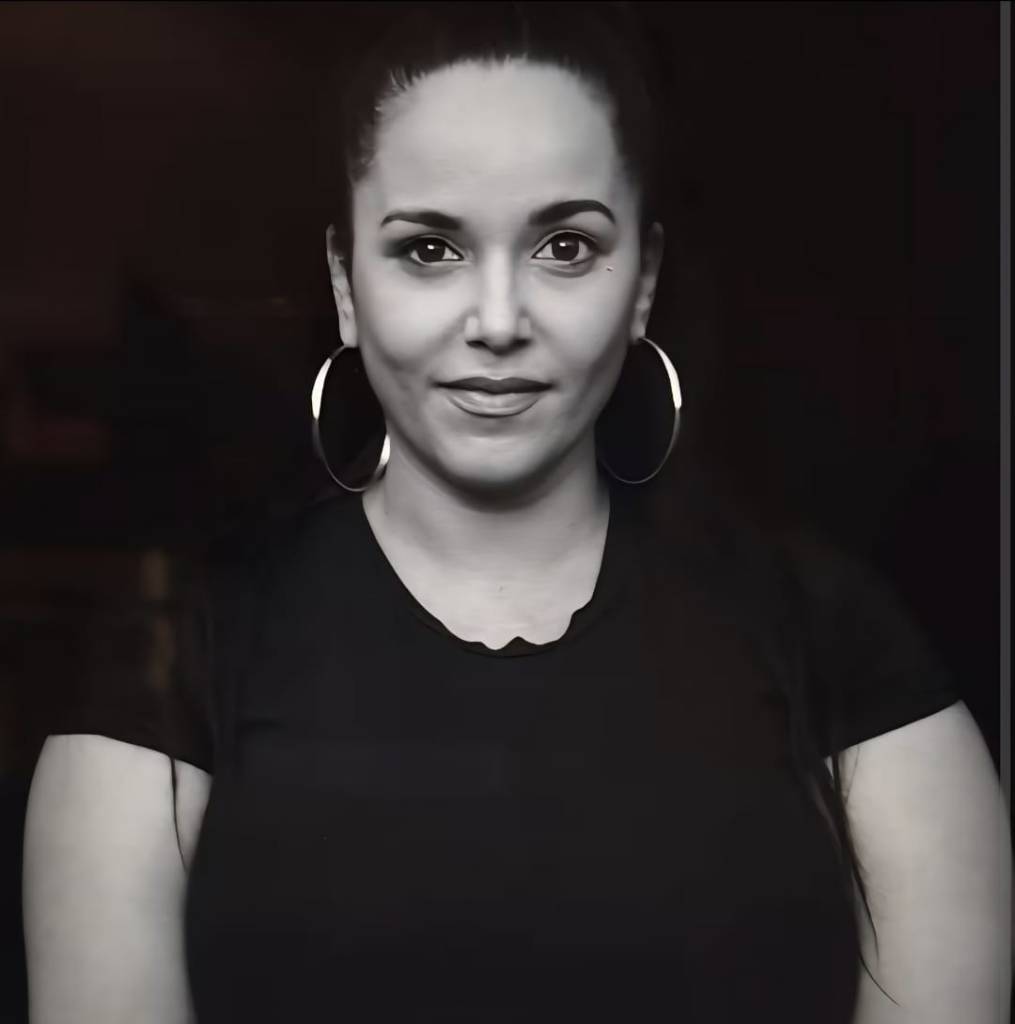
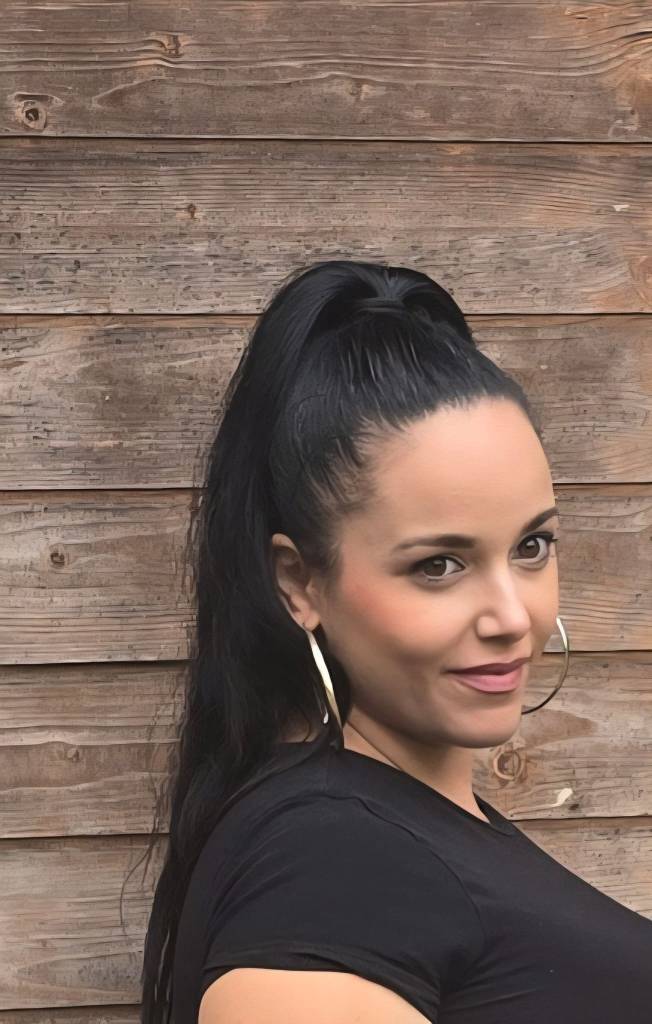
Marina was portrayed for the photo project Girl Interrupted by Felix Bucher for the NGO On Board Together.
Blick, 13th October 2025 by Katja Richard
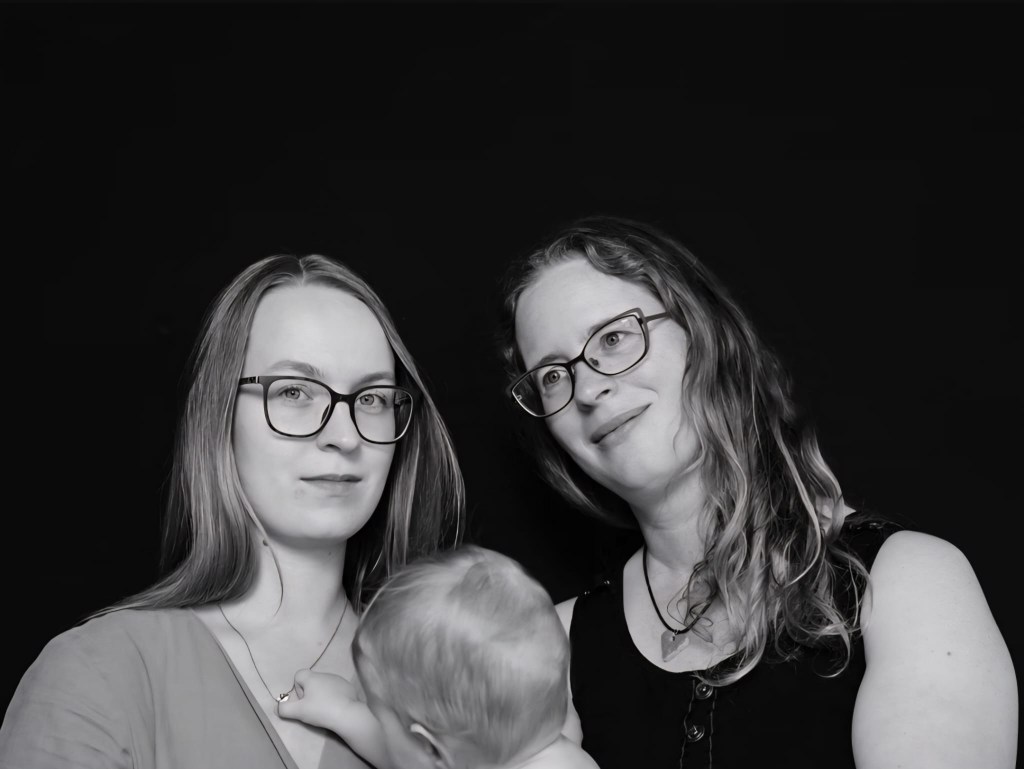
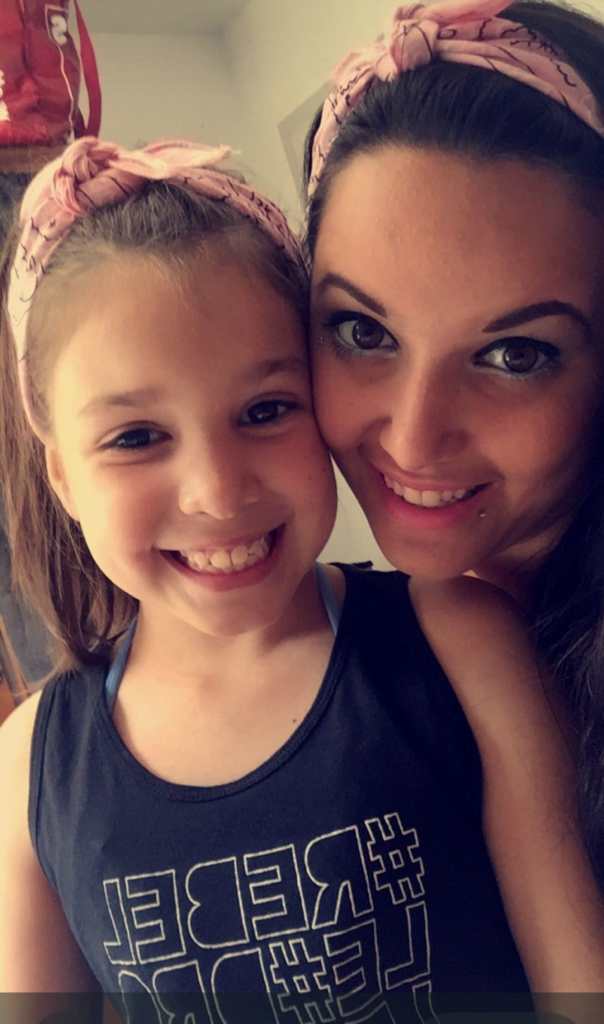
Already a grandmother at 43: Karine Rossel (on the right) with her daughter Mélissa and her granddaughter Sidonie. 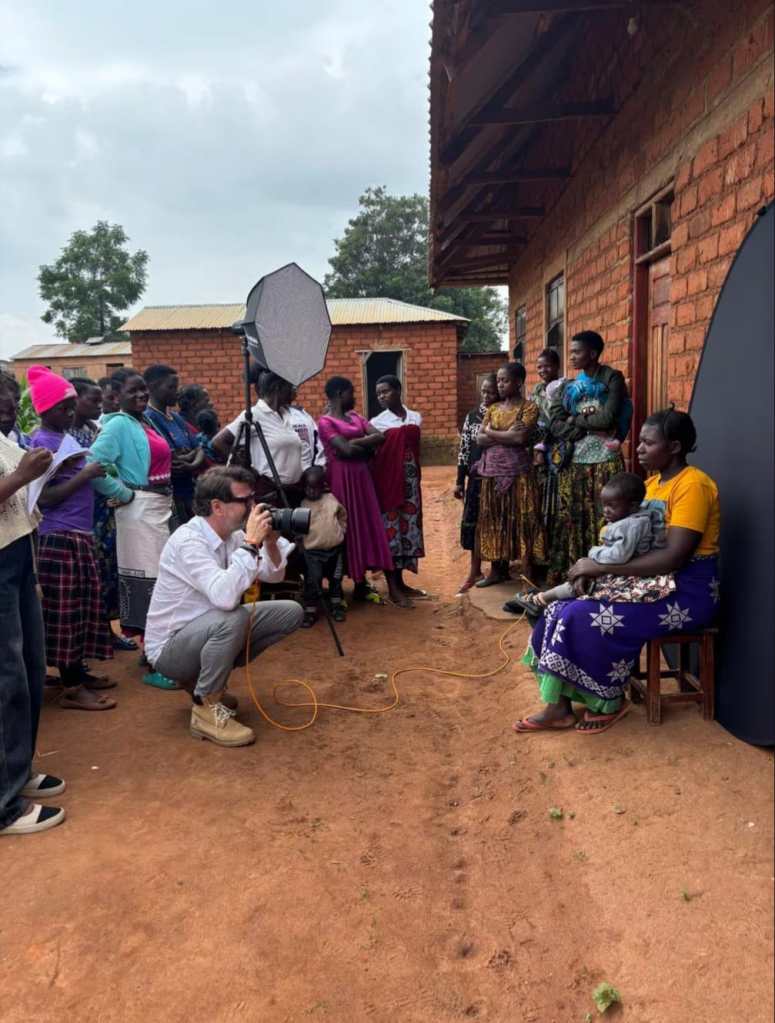
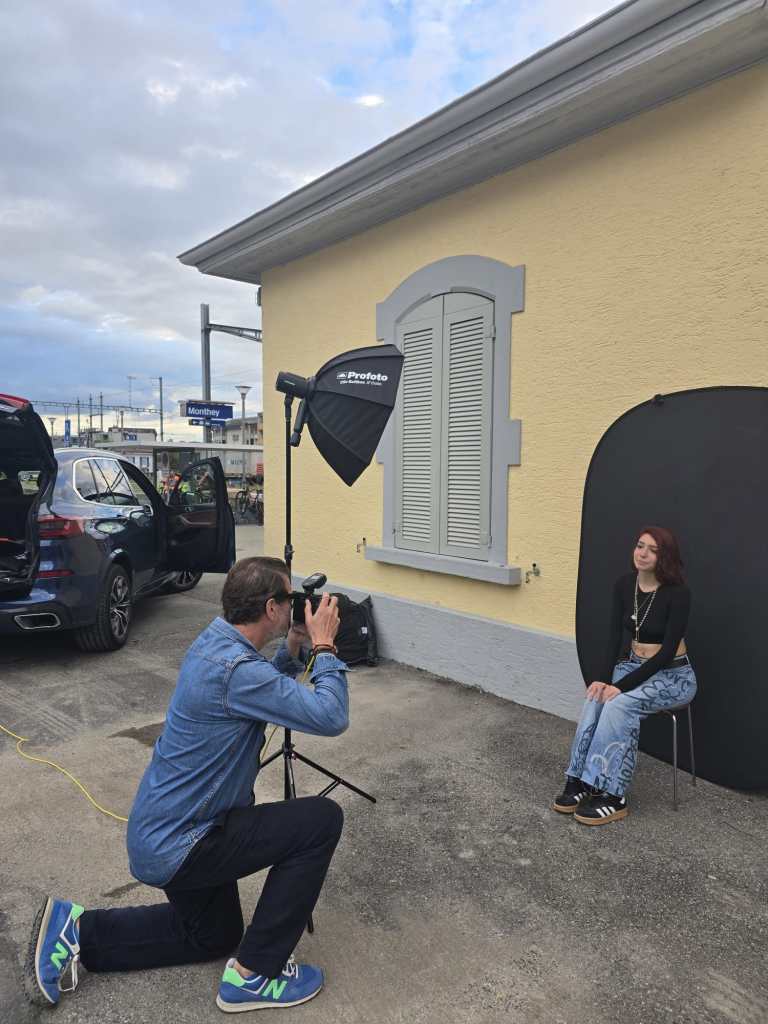
The photographic project « Girl Interrupted » by Felix Bucher. 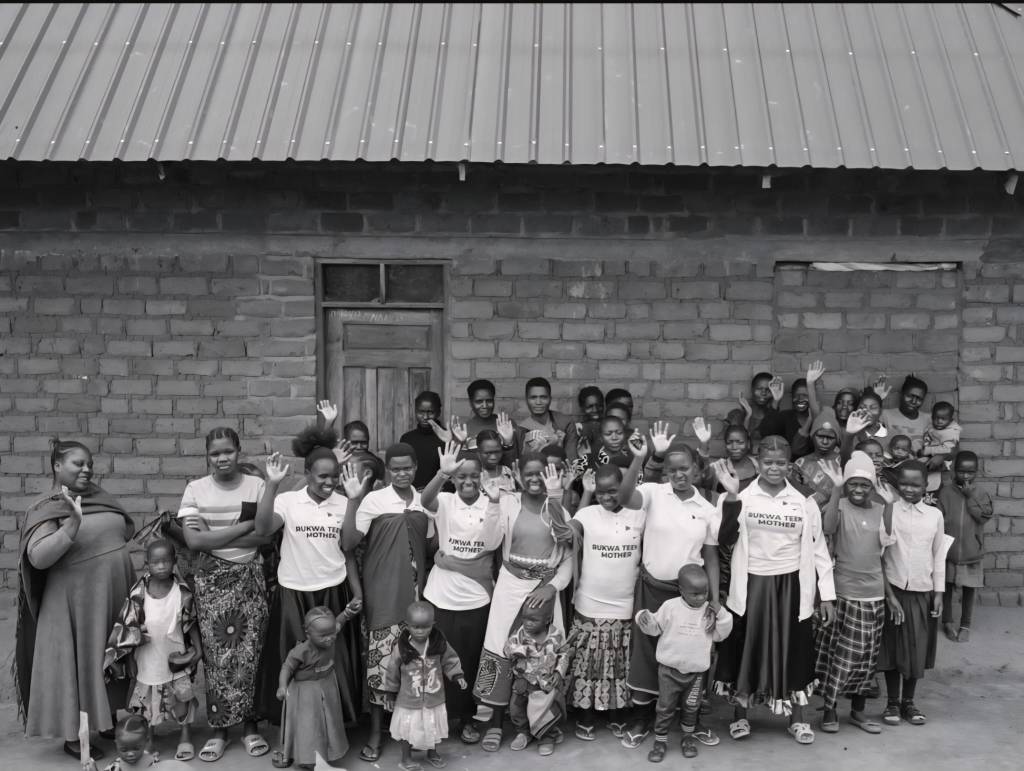
Rukwa Teen mothers in Tanzania, the NGO Forward Motion supports them by providing capacity building. 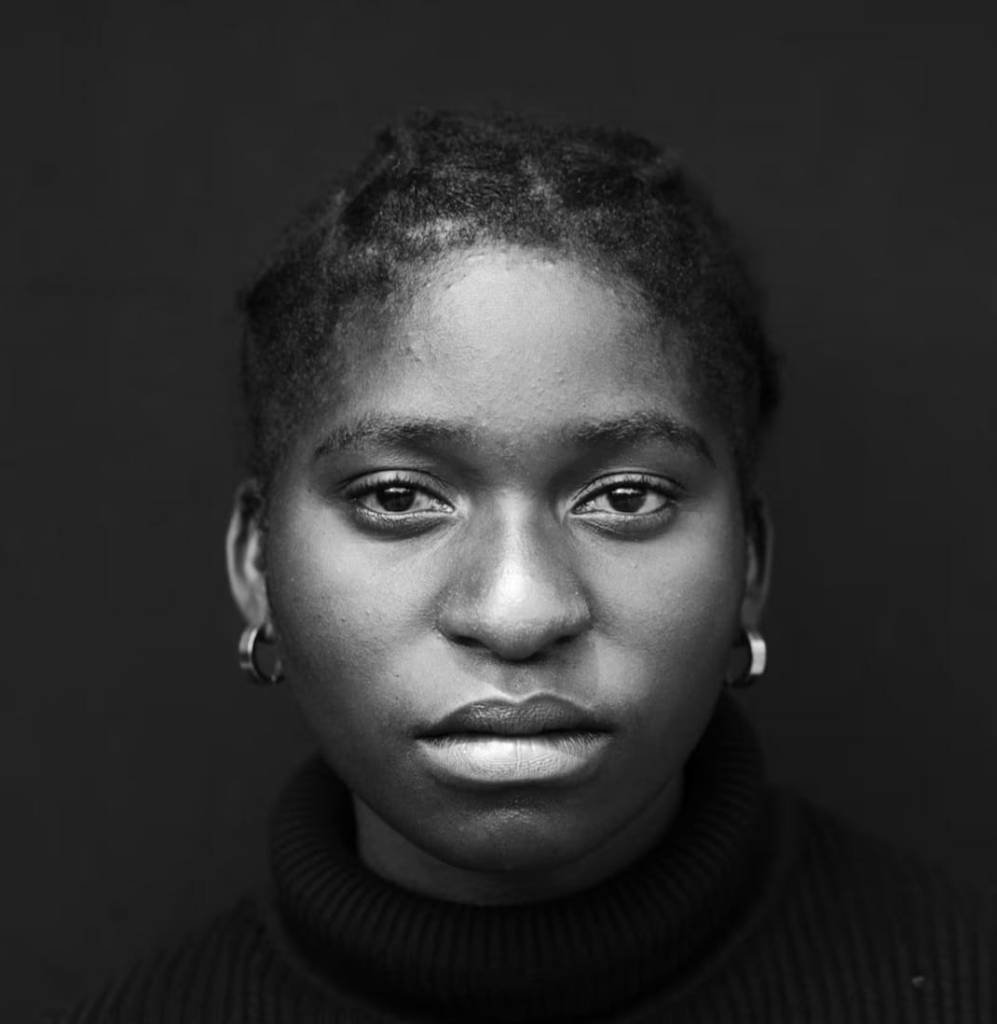
Furah is an Adolescent Mother from Rukwa in Tanzania.
200 Teenage Mothers a Year in Switzerland
Young, Alone, and with a Baby
Not even 20 years old and already a mother: 200 teenagers give birth to a child each year in Switzerland. For many, this early motherhood results in isolation and poverty. A photographic project aims to raise awareness among those concerned.
In Switzerland, teenage mothers are particularly alone. In 2023, around 200 babies were born to women under the age of 20 – only 13 of the mothers were 16 or younger.
« It’s positive, » says social worker Karine Rossel. « But it’s a huge challenge for every teenage mother. They are the ones who suffer the most from stigma and isolation. » Karine Rossel knows what she’s talking about: she herself became a mother at 16, before founding the association « JeunesParents » (YoungParents) to support young parents under 25.
Young Mothers Suffer from Shame
Karine Rossel is part of the photographic project « Girl Interrupted » by Zurich photographer Felix Bucher. The portraits show teenage mothers from Switzerland and Tanzania – two worlds that could not be more different. In Tanzania, nearly one in five girls has a child before the age of 18. Poverty, lack of sex education, or sexual abuse are often the cause. Many girls are rejected by their families, forced to drop out of school, and complications during childbirth are not uncommon.
According to the social worker, what unites young mothers in both countries is shame. « It takes a lot of courage to show yourself – that’s why these portraits touch me so much. It is important that teenage mothers are visible. » While the situation in Switzerland is safer, it remains difficult. « Becoming a parent before the age of 25 means risking falling into the poverty trap. Especially when you lose the support of your own parents or the child’s father disappears. It makes a huge difference. »
Lack of Education Leads to Poverty
Often, education is left aside. « It has nothing to do with laziness – a young child is a full-time job. Many simply cannot afford it, » explains Karine Rossel. Without a safety net, a devastating vicious circle sets in, and Karine Rossel has frequently witnessed this in her work as a social worker: « As an isolated and single mother, it is almost impossible to complete an apprenticeship. Without money, without housing, without childcare… This is how many young mothers end up in poverty. »
Karine Rossel is now committed to this cause at the political level. In February, she wrote a policy brief in collaboration with Michèle Theytaz Grandjean, a member of the Federal Commission for Family Affairs (FCFA) and Secretary General of Pro Familia Vaud. The report brings together research and recommendations aimed at highlighting the reality of young parents – in particular the risk of falling into poverty without a diploma and the lack of affordable childcare facilities. To remedy this situation, the authors call for better access to education and childcare. Although the number of young parents in Switzerland remains low, their situation remains « precarious and politically underestimated, » says Karine Rossel.
Mothers are Getting Older
The number of teenage mothers has decreased sharply – in 1970, 3,560 children were born to mothers under the age of 20, compared to around 200 today. This is due to better education, easier access to contraception, and the evolution of society: many young women want to complete their education or start a career before becoming mothers. This is reflected in the increase in the average age of parents. Today, women are on average 31.3 years old when they give birth to their first child.
And yet, the questions remain the same. How to manage education, childcare, and income when you are barely an adult yourself? « Depending on the social background, young mothers can quickly find themselves alone, » explains Karine Rossel. But becoming a mother young is not without its advantages, she says. « I had more energy to get up at night, and I worried much less about everything that could go wrong than during my later pregnancies. »
The social worker had her third child at 21 and obtained her baccalaureate. In the meantime, she has become a grandmother. « It’s a pleasure to have a granddaughter at such a young age! » She is currently preparing a doctorate in social work at the ITTS in Neuchâtel. « It is crucial that young parents share their experiences and are supported, without shame. »
Girl Interrupted, photo exhibition and discussion by the NGO On Board Together, hosted by Astrid von Stockar, Saturday, October 11, 3 p.m., Art1418@Gynhealth, Tessinerplatz 12, Zurich.
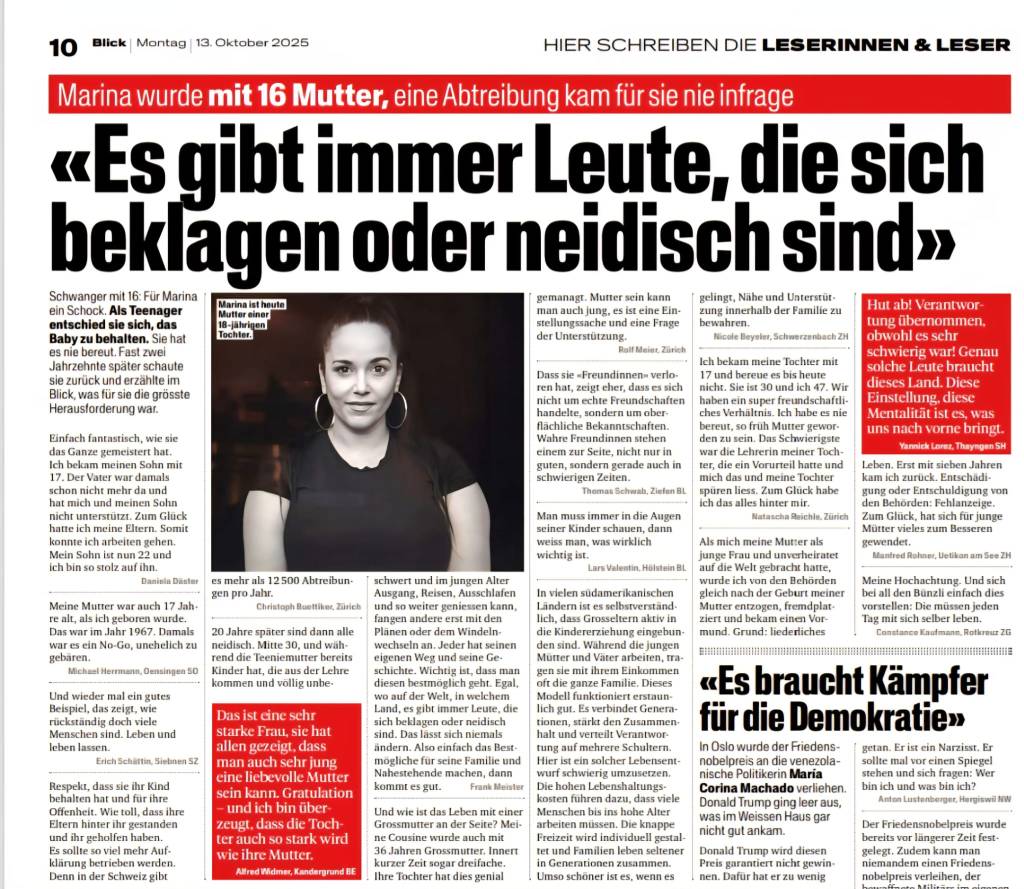
There are always people who complain or are jealous.
Simply fantastic, how she mastered it all. I had my son at 17. The father was already gone and didn’t support me or my son. Luckily, I had my parents. So I was able to go to work. My son is now 22, and I am so proud of him. Daniela Däster
My mother was also 17 years old when I was born. That was in 1967. Back then, it was no-go to give birth out of wedlock. Michael Hermann, Oensingen, SO
And once again a good example that shows how backward many people are. Live and let live. Reich Schättin, Siebnen, SZ
Respect for keeping her child and for her openness. How great that her parents stood behind her and helped her. There should be so much more education. Because in Switzerland there are more than 12’500 abortions per year. Christoph Buettiker, Zürich
20 years later, everyone is jealous. Mid-30s, and while the teenage mother already has children who are leaving their apprenticeship and are completely unsword and can enjoy going out, traveling, sleeping in, and so on at a young age, others are only just starting with plans or changing diapers. Everyone has their own story. The important thing is to follow it as best as possible. No matter where in the world, in which country, there are always people who complain or are jealous. That can never be changed. So simply do the best you can for your family and loved ones, and everything will be fine. Frank Meister
She is a very strong woman; she has shown everyone that you can be a loving mother even at a very young age. Congratulations – and I am convinced that the daughter will also be as strong as her mother. Alfred Widmer, Kandergrund, BE
And what is life like with a grandmother at your side? My cousin also became a grandmother at 36. Whithin a short time, she even had three. Her daughter brilliantly managed. You can also be a mother when you are young; it’s a matter of attitude and support. Roff Molo, Zürich
The fact that she « lost friends » shows that these weren’t real friendships, but rather superficial acquaintances. True friends stand by you, not only in good times, but especially in difficult times. Thomas Schwab, Ziefen BL
You always have to look into your children’s eyes, then you know what’s really important. Lars Valentin, Hölstein BL
In many South American countries, it is taken for granted that grandparents are actively involved in raising children. While young mothers and fathers work, they often support the entire family with their income. This model works surprisingly well. It connects generations, strengthens cohesion, and districutes responsibility across several shoulders. Here, such a lifestyle is difficult to implement. The high cost of living means that many people have to work into old age. The limited free time is spent individually, and families rarely live together in generations. It is all the more beautiful when it succeeds in maintaining closeness and support within the family. Nicole Beyeler, Schwerzenbach ZH
I had my daughter at 17 and I don’t regret it to this day. She is 30 and I am 47. We have a super friendly relationship. I have never regretted becoming a mother so early. The hardest thing was my daughter’s teacher, who was prejudiced and made me and my daughter feel it. Fortunately, I have all that behind me. Natascha Reichle, Zurich
When my mother gave birth to me as a young, unmarried woman, I was taken away by the authorities immediately after my mother’s delivery, placed with someone else, and given a guardian. The reason : dissolute life. I didn’t come back until I was seven. Compensation of apology from the authorities: none. Fortunately, many things have changed for the better for young mothers. Manfred Rohner, Uetikon am See ZH
Hats off! You took responsibility, even though it was very difficult ! This country needs exactly such people. This attitude, this mentality is what moves us forward. Yannick Lorez, Thayngen SH
My highest respect. And with all these Bünzli (a conformist petty bourgeois), just imagine this: They have to live with themselves every day. Constance Kaufmann, Rotkreuz ZG
 On Board Together